Who Supplies Your Water in Texas? How to Find Your Provider
Finding the right water provider in Texas can be harder than it sounds: the company on a bill, the system named in a report and the source that treats the water may not be the same. Start with your bill, then use the state’s drinking-water search tool to check the system and ask the right follow-up questions.
Why identifying your water provider can take some untangling
For many households, “Who supplies my water?” seems like it should have a one-line answer. In practice, the name you need can depend on what you are trying to find out. You might be looking for the organization that sends your bill, the public water system responsible for the tap water, or the supplier that treats and delivers water to another provider.
Those roles can overlap, but they do not have to. A property may be served through an arrangement in which a local provider delivers water obtained from a larger supplier. The name on a bill may also be different from the system name used in a water-quality record. That does not automatically mean the bill or record is wrong. It can mean the two sources are describing different parts of the service chain.
It helps to separate these questions:
- Who bills for water service? The bill is the most practical place to start. It can show a provider name or other billing contact, as well as account details you can use when asking for help.
- Which public water system serves the property? This is the identity you may need when looking up system information in a state database or reading a water-quality report.
- Who treats or wholesales the water? A provider may obtain water from another system. That supplier can matter when you are trying to understand the water’s sources or treatment, but it may not be the organization you contact about a billing question.
- Who handles a problem at the property? The answer can depend on the problem. A billing question, a service interruption, a water-quality concern and a leak may call for different contacts.
Start with the immediate need. If you want to pay a bill or ask why a charge changed, use the provider or billing contact shown on the bill. If you want to identify the public water system for a report search, use the bill as a clue and check the system information separately. If you have an unusual taste, smell or color, the provider can help determine whether the issue may be on the utility side or within the property’s plumbing. For practical ways to narrow down that kind of issue, see Utility Water or Your Own Plumbing? Tracing a Texas Tap Problem.
The distinction also matters when you move. A property’s address is not always enough to tell you which provider serves it, especially if nearby homes have different arrangements or if a community uses a district or other local provider. Confirm the service for the exact property rather than relying on a neighbor’s bill, a real-estate listing or a general map.
The goal is not to decode every part of the water-supply system before you can make a call. It is to identify the organization that can answer your question, then check that you have matched the correct system and property.
Start with the water bill
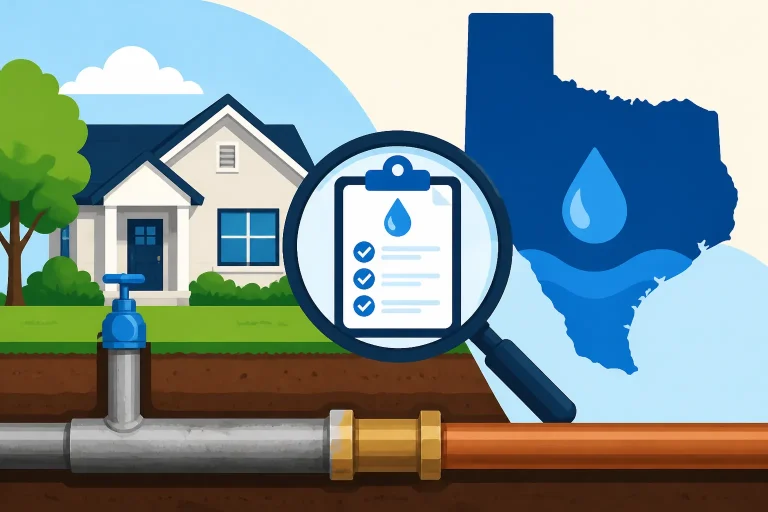
A current water bill is usually the most useful starting document because it connects a service address with a provider or billing account. According to the Texas Commission on Environmental Quality, the facility’s drinking water provider can be found on a copy of your facility’s monthly water bill.
For a home, look over the bill for the name that appears to identify the water provider. Do not assume every company name printed on the document is the supplier. A bill may include a payment processor, property manager, homeowners’ association or another organization involved in billing. Look for labels that identify water service, the account holder or the organization responsible for the account. If the bill is unclear, ask the listed billing contact which public water system serves the service address.
Keep the bill available when you make that inquiry. It can help the provider locate the account and verify that you are asking about the correct property. You do not need to share account information publicly; use the provider’s official contact channel.
If you do not receive the bill
Renters may not see a direct water bill if the landlord, property manager or another account holder handles the service. Ask who provides water to the building and whether the property has an individual account or shared billing arrangement. If the person you ask only knows who collects payment, ask whether they can confirm the public water system or pass along the provider’s name.
A tenant can also check documents given at move-in, building notices, a lease or other property records for a water-service contact. Treat those as leads, not final confirmation. The provider may have changed, or the documents may name a billing agent rather than the system serving the taps.
If you are in an apartment or other multi-unit building, be specific about whether your question concerns the building’s water service or an issue inside your unit. A building contact may know who handles the account, while the water provider can answer questions about the public system. For more on finding water records when the landlord receives the mail, see Landlord Pays the Water Bill? You Can Still Request the Texas CCR and Apartment Tenants and Texas Water Reports: Who Gets the Mailed Copy.
If the property has more than one water source
Some properties may have separate arrangements for different uses, such as a public water connection alongside a private well or another on-site source. Do not assume that a bill for one service describes every tap or water system on the property. Ask which source supplies the particular fixture or part of the building you are concerned about.
If you are buying a home, ask the seller or agent to identify the water provider and explain whether the property has any private supply as well. Then verify the public-service details independently. The bill can help you find the billing provider, while system records can help you determine whether the named system matches the property. For a broader move-in checklist, see Moving Into a Texas Rental: Water Questions to Ask Before You Sign.
Use the Texas Drinking Water Viewer to search for a system
After checking the bill, use the Texas Drinking Water Viewer to look for the public water system that may serve the property. According to the Texas Commission on Environmental Quality, the Texas Drinking Water Viewer is a data viewer. It is a way to look for public water-system information; it should be treated as a search and verification tool, not as a substitute for confirming service directly with the provider.
You do not have to know the full system name before you start. According to the Texas Commission on Environmental Quality, the viewer allows users to search a partial name. If you have a likely provider or system name from a bill, notice or property document, enter the most distinctive part of it and compare the results. A partial search can help when you are unsure of the formal name or how it is written in the database.
The viewer can also narrow searches using system type, county or source-water type, according to the Texas Commission on Environmental Quality. These filters can be useful if a search returns several possible systems or if you know the county but do not know the official system name.
A practical search process looks like this:
- Begin with the provider or system name shown on the bill, using a distinctive part of the name if the full wording produces no clear match.
- If you have too many results, use the county or another available filter to narrow the list.
- Compare the result’s name and system information with the wording on your bill or property documents.
- Keep track of any uncertainty rather than treating a similar name as proof that you found the right system.
- Contact the provider and ask it to confirm which public water system serves the exact service address.
The viewer is most useful when you already have a clue to investigate. A partial provider name, county or other information from a bill can make it easier to narrow your search. If you start with only a street address and are not sure how the viewer handles address searches, do not assume that a map result alone identifies the provider. Ask the provider to confirm service for the property.
What to compare in the search results
Pay attention to the system name and the type of information you were looking for. A public water-system record may use a formal name that differs from the shorter name people use in conversation. It may also identify a system that supplies water to another provider rather than the organization that sends your household bill.
If the result appears close but not exact, note the difference and ask about it. A similar name can be a useful lead, but it is not enough to establish that the system serves your address. The provider can help reconcile a formal database name with the service name on the bill.
For related help with linking a utility’s identity to its system record, see Matching the Provider on Your Water Bill to a Texas PWS ID. If you are still trying to identify the company or district that bills you, Finding the Right Utility for a New Texas Address may help you organize the search.
Match the bill, system record and water-quality report
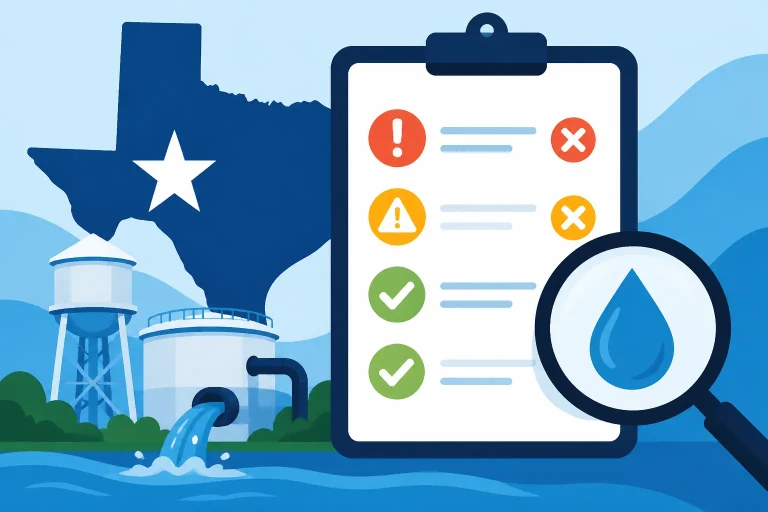
Finding a likely system is only part of the job. The next step is to make sure the information you find applies to your property and the question you are asking. The name on a bill, a public water-system record and a water-quality report can refer to related but different organizations.
A useful way to check the match is to write down the names as you find them:
| Information you have | What it can help establish | What to confirm |
|---|---|---|
| Water bill | The provider or billing contact associated with the account | Whether that organization operates the public water system or bills on another provider’s behalf |
| Viewer search result | A possible public water-system record | Whether that system serves the exact service address |
| Water-quality report | Information reported for a named system or supply | Whether the report covers the water supplied to your property |
| Property or lease paperwork | A contact or service arrangement tied to the building | Whether the arrangement is current and which organization handles water service |
| Provider’s confirmation | Whether the provider recognizes the address as within its service | Which contact to use for your specific question |
Do not assume that a report for a nearby city or a familiar provider applies to your home. A boundary, service arrangement or wholesale relationship can make a difference. Confirm the system with the provider that serves the address before relying on a report for a specific property.
If the provider buys water from another supplier
A provider may rely on water from another system. In that situation, you may see a provider name on your bill and a different name in a report or system record. Ask the provider whether it supplies water directly to your property or receives water from another supplier, and which report or record is relevant to your service.
That question can help you avoid a common mix-up: finding information about the source or treatment facility but not knowing whether it describes the water delivered to your neighborhood. A provider can clarify which system record to use and whether a report from a wholesale supplier is relevant to its customers.
When your goal is to understand where the water comes from rather than who sends the bill, the source information may require its own follow-up. See Where Texas Tap Water Comes From: Rivers, Reservoirs and Aquifers and Your City Buys Wholesale Water: Which Texas Report Covers Fluoride? for related questions about supply and reporting.
If names do not line up
A difference in names is a reason to verify, not a reason to assume the water service is wrong. A provider might use a public-facing name that is not identical to a formal system name. A property manager might send a payment notice under its own name. A report might list a supplier or system rather than the billing contact.
When you contact the provider, describe the mismatch plainly: give the name on the bill, the name you found in the viewer and the service address. Ask which system serves the address and which record or report applies. If the provider confirms that a different system name is correct, keep that information with your water records.
If you are checking a report because of a particular contaminant or water-quality result, do not stop at a similar-looking system name. Confirm the match before interpreting the result. Texas Consumer Confidence Reports: A Homeowner’s Guide explains what to look for in a report, while A Contaminant Was Detected in Your Texas Water Report. Is It Unsafe? covers how to approach a reported detection.
Special cases: renters, new addresses and unusual service arrangements
Some searches are difficult because the person looking for the provider is not the person named on the account. Others are difficult because the property’s service arrangement is not obvious. In either case, the aim is to get confirmation tied to the exact address, not just a likely name.
Renters and shared accounts
If a landlord or property manager pays the water bill, ask for the name of the provider and the public water system serving the building. If the manager cannot answer, ask who maintains the account and who receives water-quality notices. You can also ask whether the provider can confirm the system serving the address, even if you are not the account holder.
For a multi-unit building, the water account may cover the whole property rather than an individual unit. When you contact the provider, use the building’s service address and explain that you are asking as a tenant. The provider can tell you what information it can confirm and whether the building owner or account holder needs to make a request.
If water quality differs between units or only one faucet has a problem, the system identity may not explain the whole issue. A building’s internal plumbing can affect water after it enters the property. See Narrowing Down an Off Taste at Just One Faucet in a Texas Home for a way to distinguish a local fixture problem from a broader supply concern.
New home or recent move
When you move, do not assume that the provider serving the previous resident is the only useful source of information. Check the current bill or service setup for the property and confirm the provider directly. If service has not yet been placed in your name, ask the seller, landlord or property manager who handles the account and request the provider’s name.
If you are choosing between properties, asking about water service before you commit can surface practical differences: who bills, how to reach the provider and where to find system information. For a purchase, the name alone is not the whole picture. You may also want to review the utility’s report and understand whether the property is served by public water, a private well or a combination. See Who Supplies My Texas Home, and Is It Lake Water or Groundwater? for source-related follow-up.
When the property may rely on a private well
A public water-system search is not a substitute for confirming a private well. If the property is not served by a public provider, there may be no utility bill to use for identifying a public system. Ask the owner or seller directly whether the property uses a private well, and request the available well records and water-test results.
Do not use a nearby public system’s report as though it describes a private well. The source and treatment can be different, and the well owner is responsible for arranging appropriate testing. If you are buying, Buying a Home With a Private Well in Texas: A Buyer’s Guide and Getting Water Tested in Texas: Labs, Costs and Sampling can help with the next steps.
If a property has both a public connection and a well, ask which source serves each part of the plumbing. A bill for the public connection does not tell you what is in water drawn from a separate well. Keeping those supplies distinct is especially important when you are arranging testing or considering treatment.
What to ask once you have a likely provider
A clear question can save time when you reach the provider. Instead of asking only, “Are you the water company?” explain what you are trying to confirm. The provider may be able to verify the service address, clarify the public water-system name or direct you to the appropriate contact.
Useful questions include:
- Does your organization provide water service to this exact address?
- What public water-system name should I use when searching for records?
- Is the name on my bill the operating provider, a billing contact or another part of the supply arrangement?
- Does another supplier provide water to your system?
- Which water-quality report or system record applies to this address?
- If I have a problem with water at the property, which department or contact should I use?
- If I rent, can you tell me what information you can provide to a tenant, or does the account holder need to contact you?
Keep a short note of the answer, including the system name the provider gives you and the date you checked. This is not a substitute for official records, but it makes it easier to repeat the search later or explain the issue if you contact the provider again.
For a report-related question, ask for the report that covers your system rather than simply requesting “the water report.” Providers may publish information under a system name or another formal label. Once you have the right name, Where to Find Your Utility’s Water Monitoring Reports can help you continue the search.
If the issue is a sudden change in water, describe what changed, where you notice it and whether other taps are affected. A provider can help assess whether the concern may be connected to system service or whether additional investigation is needed. For a practical checklist, see A Texas Troubleshooting List for Cloudy Water, Smells and Low Pressure. If the change is in taste, odor or color, Odd Taste, Smell or Color in Texas Tap Water: Health Risk or Nuisance? offers related context.
Common mistakes to avoid when looking up a Texas water provider
A provider search can go sideways when a clue is treated as confirmation. These checks help keep the result tied to the property and the question.
Treating a similar name as a confirmed match
A search result with a familiar city, district or company name may be relevant, but it does not prove that the system serves your address. Compare it with the bill and ask the provider to confirm service for the exact property.
Assuming the bill’s logo names the water system
The bill may identify the organization that collects payment or manages an account rather than the formal name used in public-system records. Ask what name to use for a system search, particularly if you are trying to find a report.
Using a neighbor’s information as your own
Nearby homes can have different providers, accounts or supply arrangements. A neighbor’s report or utility name can point you in a useful direction, but it should not replace confirmation for your address.
Assuming the system record answers every question
The viewer can help locate public water-system information, but a system record does not necessarily tell you who to contact about a billing dispute, a leak on the property or a problem with a particular faucet. Use the provider’s customer contact for service questions and ask which department handles the issue.
Reading a report before confirming which system it covers
A water-quality report only helps with your question if it applies to the system supplying the property. Confirm the system name before drawing conclusions from the report. If you are uncertain whether the report covers your home’s water or a supplier’s water, ask the provider to explain the relationship.
Assuming every property has a public water provider
Some Texas properties may use a private well or another arrangement instead of a public water connection. If there is no water bill or the property owner says the home uses a well, confirm the source directly and look for well-specific records and testing rather than relying on a nearby public system.
Frequently Asked Questions
Is the name on my water bill always the name of the public water system?
Not necessarily. The bill is a good starting point, but the billing contact and the formal system name may differ. Ask the provider which public water-system name applies to your service address.
Can I search the Texas Drinking Water Viewer without knowing the full system name?
Yes. According to the Texas Commission on Environmental Quality, the viewer allows users to search a partial name. You can also narrow a search by system type, county or source-water type.
What if I rent and the landlord pays the water bill?
Ask the landlord or property manager for the provider’s name and the public water system serving the property. If the information is unclear, ask the provider what it can confirm for the address and whether the account holder needs to make the inquiry.
What if the provider on my bill is different from the name in a report?
Ask the provider to explain which public water system serves the address and which report applies. A different name may reflect a billing arrangement, a formal system name or another supplier in the water-service chain.
Does a public water-system search tell me what is in my private well?
No. A nearby public-system record should not be treated as a test result for a private well. Confirm the property’s source and arrange well-specific testing when needed.
Sources
- Texas Commission on Environmental Quality — Instructions for Texas Drinking Water Viewer – Texas Commission on Environmental Quality – www.tceq.texas.gov (checked November 13, 2026)
- Texas Commission on Environmental Quality — Voluntary Lead Testing in School and Child Care Drinking Water – Texas Commission on Environmental Quality – www.tceq.texas.gov (checked November 13, 2026)
Disclaimer
This article is for general informational purposes only and does not constitute professional advice. Laws, prices and regulations vary by location and change over time. Consult a qualified professional for guidance on your specific situation. Texas Water Guide is not a government agency or water utility and is not affiliated with any public water system.