Where Texas Tap Water Comes From: Rivers, Reservoirs and Aquifers
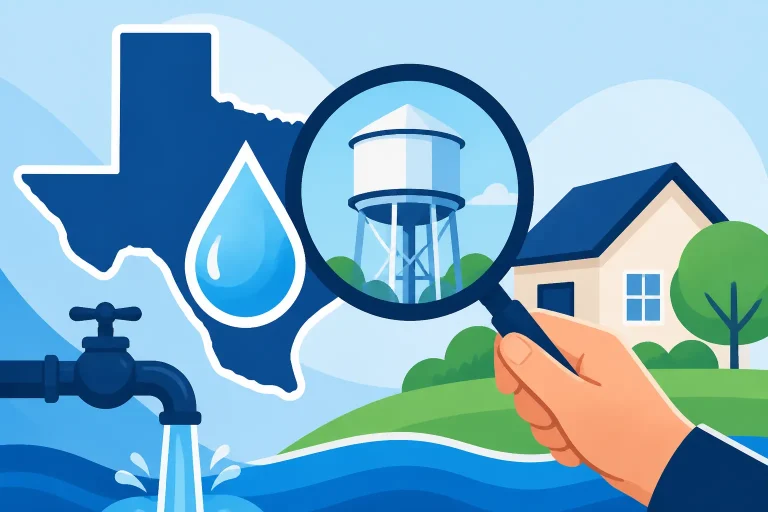
If you are trying to find out where the water at your Texas tap originates, the answer may not be as simple as “the lake” or “the well.” A utility can use more than one source, buy treated or untreated water from another provider, or change how it blends supplies. Here’s how to trace the source, read the information in a water report, and understand what it does—and doesn’t—tell you.
Why the source of your tap water matters
Knowing where your water comes from can help make sense of its taste, mineral content, and reported quality. It can also help you ask more useful questions when a utility posts a notice or when the water at home changes unexpectedly. But the source is only part of the story: treatment, distribution pipes, and household plumbing all affect what eventually comes out of a faucet.
A public water system may draw water from an aquifer, take it from surface water such as a river or reservoir, or receive water purchased from another system. A provider may also use a combination of sources. These categories describe where the water begins or how it enters the system; they do not, by themselves, tell you whether a particular tap is safe or what treatment it received.
For a household, the practical questions are usually:
- Who is responsible for supplying the address?
- What source or sources does that provider report?
- Does the provider treat the water itself, or receive it from another system?
- Is the information about a whole system, a particular source, or a sample from a tap?
- Has anything changed recently that could explain a new taste, smell, or appearance?
Start by identifying the provider, especially if your home is in an apartment, a small district, or a community that buys water wholesale. The water company named on a bill may not be the system that originally treated the water. Who Supplies Your Water in Texas? How to Find Your Provider explains how to identify the provider serving an address. If your bill names a different organization than the one you expected, Matching the Provider on Your Water Bill to a Texas PWS ID can help you connect the billing name with the public water system record.
Source information is useful context, not a substitute for a water quality report or a current notice. A river, lake, or aquifer is not a complete description of the water after treatment and delivery. Nor does one source name mean that every home in the service area receives water in exactly the same way.
The main source categories: groundwater, surface water, and purchased water
The Texas Commission on Environmental Quality groups public water system reporting by Groundwater Surface Water Purchased Water. These categories give you a starting point for understanding a provider’s supply. A source description may name a particular aquifer, reservoir, lake, or other source location, while the reporting category indicates the broad type of supply.
| Source category | What it generally means | What to look for in the report |
|---|---|---|
| Groundwater | Water drawn from below the ground, commonly through wells that reach an aquifer | The aquifer or source name, source location, and whether the provider reports more than one groundwater source |
| Surface water | Water taken from an above-ground source, such as a river, reservoir, or lake | The named source and its location; check whether the report also identifies other supplies |
| Purchased water | Water received from another public water system or supplier | The supplying system or source details, and whether your provider’s report explains where the purchased water originates |
Groundwater and aquifers
Groundwater is water held below the ground in spaces within soil or rock. An aquifer is a formation that can store and transmit groundwater. A provider that uses groundwater may draw it from wells, but the source listing in a report is what helps identify the aquifer or named source associated with that system.
A groundwater source can matter to residents because minerals naturally present in the surrounding geology may affect water characteristics such as hardness or taste. That does not mean every well in an aquifer produces identical water. The precise source, how water is treated, and whether supplies are blended can all influence the results reported for a system.
If your household uses a private well rather than a public water system, a utility’s report does not describe your well. Private well owners need to arrange their own testing and interpret the results for the specific well. For a public system’s reported source, see Edwards, Trinity or Ogallala: Which Aquifer Feeds Your Texas Tap? for a closer look at how aquifer information can be relevant to a Texas supply.
Surface water: rivers, reservoirs, and lakes
Surface water is water collected from sources above ground. A utility’s source information may identify a river, reservoir, or lake and give the city or county where that source is located. The named source can help you understand the general origin of the supply, but it does not necessarily show the full route the water takes before it reaches your home.
Surface water may be treated before distribution, and a system may use more than one source or blend supplies. The report and provider are the places to check for the details of a particular system. If the taste changes after a source or treatment adjustment, the source name alone may not explain the change. Treatment and blending can matter too. How River-Fed Reservoirs Become a Texas City’s Drinking Water describes the path from a surface source through treatment and delivery.
Purchased water
Purchased water means a provider receives water from another system or supplier. That arrangement can make the source harder to trace: the name on your water bill may belong to the provider that delivers water to your neighborhood, while a separate supplier operates the system that treats or originally sources it.
A purchased-water entry is not necessarily the same thing as a named natural source. Look for the supplying system and any source information available in the report. If the report does not make the relationship clear, ask your provider whether it purchases water and which supplier’s information covers that supply. Your City Buys Wholesale Water: Which Texas Report Covers Fluoride? focuses on a specific reporting question that can arise when water is purchased; the same basic point applies when tracing the origin of a supply: identify which system’s information covers which part of the water journey.
How source water becomes tap water
The word “source” refers to where water enters a supply chain, not necessarily the place where your household gets water directly. Between a river, reservoir, aquifer, or supplier and a kitchen faucet, water may be treated, stored, moved through pipes, and combined with other supplies. The exact path differs by system, so avoid assuming that every Texas provider uses the same sequence or equipment.
A useful way to think about the path is to separate it into stages:
- Source: Water is obtained from groundwater or surface water, or received from another provider.
- Treatment: The responsible system applies treatment suited to its water and operating requirements.
- Storage and distribution: Water moves through the system’s infrastructure to the service area.
- Household plumbing: After water reaches a building, its fixtures and pipes can affect what comes out of a particular tap.
These stages explain why a source listing cannot answer every question about water quality. A source name does not show whether a home has older plumbing, whether a particular fixture is contributing a problem, or whether a recent change is limited to one building. It also does not tell you whether a sample was collected at the source, treatment plant, distribution system, or a customer’s faucet.
If the water looks, smells, or tastes different, note whether the change affects one faucet or several, whether it is limited to hot or cold water, and whether neighbors are noticing it too. Those clues can help narrow down whether to contact the utility, landlord, or a plumber. Utility Water or Your Own Plumbing? Tracing a Texas Tap Problem offers a way to think through that distinction. For sudden changes that affect more than one outlet, When to Call Your Texas Utility About Sudden Water Changes can help you decide what information to share with the provider.
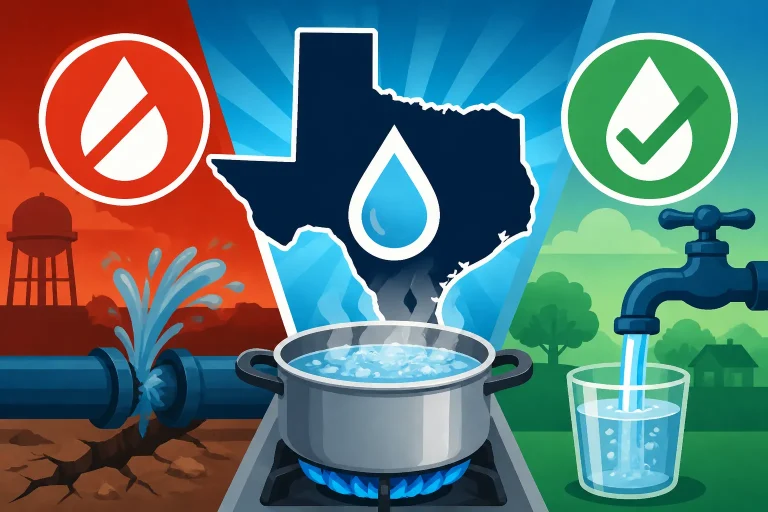
It is also useful to distinguish source changes from temporary water-quality concerns. A provider’s routine source description may remain the same while a treatment process or blend changes. Conversely, a new source entry does not automatically mean there is a problem. If the provider posts an advisory or notice, follow that notice rather than trying to infer safety from the source type. Tap Water Changed Overnight? Where Texans Can Check for Notices explains where to look for current information.
How to find the source for your address
Finding the right source information starts with identifying the public water system that serves your home. A city name alone may not be enough: nearby neighborhoods can be served by different providers, and a bill may use a billing name that differs from the system’s formal name.
Use a step-by-step approach:
- Check your water bill or lease paperwork. Note the name of the billing provider and any system identification details shown. If the water bill is included in rent, ask the landlord or property manager which provider serves the building.
- Confirm the provider for the address. Use the provider’s official information or the relevant state drinking-water search tools. If the property is in a subdivision or outside a city center, do not assume the nearest city utility is the supplier.
- Find the provider’s water quality report. Search for the current Consumer Confidence Report, often shortened to CCR. A report may be posted on the provider’s site or made available through another official channel.
- Look for the source-water section. Find the name of the source and its location, and note whether the report describes groundwater, surface water, purchased water, or more than one category.
- Check for wholesale supply. If the provider buys water, ask which supplier provides it and whether the report includes the supplier’s source details.
- Compare with current provider updates. Routine annual reporting and a current notice serve different purposes. Look for recent notices or updates if your question concerns a change happening now.
The Texas Commission on Environmental Quality says searches can be narrowed by System type, county, or source-water type. Those options can help when you know the county or broad supply type but are unsure of the system name. Search results still need to be matched to the correct address; a nearby system’s record does not necessarily apply to your property.
For a more focused search, Where Your Texas Utility Lists Its Water Sources and Supply Details can help you locate the relevant section. What the Texas Drinking Water Viewer Shows, and What It Leaves Out is useful if you are using a state data tool and need to understand what a search result can—and cannot—tell you. Once you have the system name, Texas Consumer Confidence Reports: A Homeowner’s Guide explains how to use the annual report as a starting point.
If you rent, you can still ask which provider serves the building and request access to the water quality information. A landlord may receive bills or notices that a tenant does not see directly. How Texas Renters Can Find the Utility Behind Their Tap covers the provider-identification problem for renters.
How to read the source information in a CCR
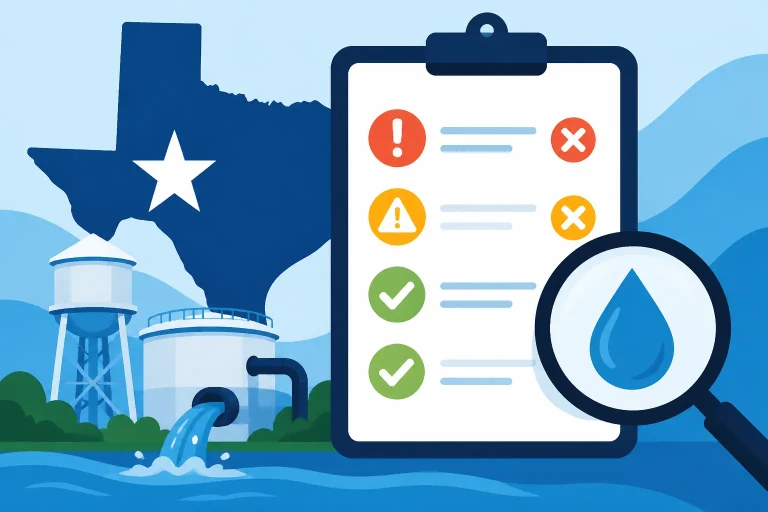
A Consumer Confidence Report is designed to communicate information about a public water system’s drinking water. The source section is a useful place to begin, but it is not the whole report. Read the source description alongside the reported monitoring results, any explanations of violations or notices, and any information about purchased water.
The Texas Commission on Environmental Quality says the CCR must identify the Reservoir/Aquifer/Lake, and the City/County the source is located. When you find that entry, use it to identify the named source and its location, then check how the report classifies the supply. The wording is a useful clue, but the provider can clarify how the source relates to water delivered to your address.
As you read, ask:
- Does the report name a groundwater source, a surface-water source, or purchased water?
- Does it list more than one source?
- Is a supplier or wholesale system identified?
- Does the report explain whether the listed source supplies the whole system or only part of it?
- Are the results reported for the system overall, for a particular source, or for a specific type of sample?
- Does the report point to a separate inventory, source-water assessment, or provider update?
Do not treat a source description as a test result. For example, “aquifer” does not tell you the measured concentration of a particular substance at your tap. A lake or reservoir name does not tell you whether a household’s plumbing has affected water at a particular faucet. For contaminant details, use the data and explanations in the report rather than making assumptions from the source.
Also pay attention to how a system describes purchased water. The provider on your bill may distribute water supplied by another system, while the source and treatment details may be documented in a report associated with the supplier. Ask the provider which report applies to the water delivered to your service area if that relationship is unclear.
A report’s dates matter, too, but do not assume that an annual report is a live update. Routine reports summarize information for a defined reporting period; current notices address more immediate circumstances. If you are investigating a recent issue, check the provider’s current updates in addition to the CCR.
For a closer look at source entries, River, Reservoir or Groundwater? Reading a Texas CCR’s Source Line walks through how to interpret the kind of wording you may see. If the report contains several source values or appears not to match what you experience at home, Home Tap Doesn’t Match the CCR? How Texas Results Can Differ can help explain why system-level reporting and household water are not always identical.
What a source can—and cannot—tell you
A source name answers an important question: where does the system say its water comes from? It can help you understand whether the supply is groundwater, surface water, purchased water, or a combination. It may also point you toward more relevant questions about the system and its report.
But the source alone does not establish that the water at a specific tap is safe or unsafe. It does not tell you the condition of a building’s plumbing, the result of a test taken at your kitchen faucet, or whether the provider has issued a current advisory. Those questions need different information.
| What the source information can help with | What it cannot establish by itself |
|---|---|
| Identifying a named aquifer, reservoir, lake, or other reported source | The quality of water at a particular household faucet |
| Understanding the broad supply category | The complete treatment process or the precise path water takes to a home |
| Noticing that a provider reports purchased water | Which supplier’s report covers every detail, unless the provider clarifies it |
| Giving context for questions about taste or supply changes | Whether a taste or odor is a health concern |
| Pointing you to the right utility or report | Whether household pipes, fixtures, or a water heater are contributing to a problem |
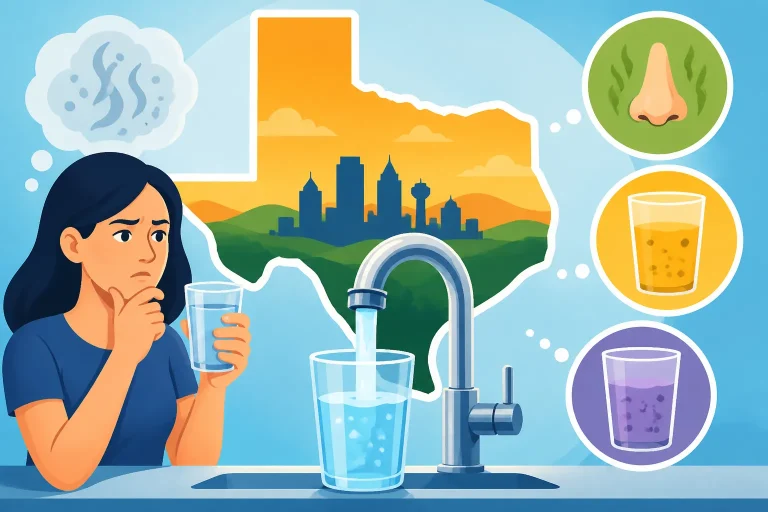
If your main concern is taste, odor, or color, start by noting where the change occurs and when it began. A change at one faucet may call for a different next step than a change throughout the neighborhood. Odd Taste, Smell or Color in Texas Tap Water: Health Risk or Nuisance? explains how to sort out common water-quality questions without relying on the source name alone. For a source-specific taste issue, Does Tap Water Taste Different After a Texas City Changes Its Source? looks at why a supply change may be relevant but not the only explanation.
If you are concerned about a possible health effect, ask the local health department or a medical professional rather than drawing a conclusion from a source category or taste. If the issue appears to affect the utility supply, contact the provider using current contact details on its official website. If it appears limited to your home, a qualified plumbing professional or a properly selected laboratory test may be more relevant.
A home filter is not a substitute for figuring out the problem first. Different treatment products are designed to reduce different substances, and a filter’s certification should be checked against your own water test results or the specific concern. A source label by itself is not enough to choose a treatment device. A Homeowner’s Guide to Water Filtration Systems in Texas explains why matching equipment to the problem matters.
When the reported source does not seem to match what you expected
It is possible to search for a provider and find a source description that seems unfamiliar. Perhaps the report names a county or place you do not associate with your neighborhood, or it lists a supplier rather than a nearby river or aquifer. That does not automatically mean the report is wrong. The provider may obtain water from a source outside the immediate area, or it may purchase water from another system.
Before drawing conclusions, check whether you have the correct public water system. Then compare the report’s provider name with the name on the bill, lease, or utility account. If those names differ, ask whether one is the billing entity and the other is the water supplier or system operator. If a wholesale supplier is involved, ask which source information and water quality report apply to your address.
You can also ask specific questions instead of simply asking, “Where does my water come from?” For example:
- Which public water system serves my address?
- Does this system use groundwater, surface water, purchased water, or a combination?
- What source names and locations are listed for my supply?
- If the system purchases water, who supplies it?
- Does the CCR include the source details for purchased water?
- Has the provider changed its source or blend recently?
- Where can I find current notices and updates for my service area?
Keep the answer tied to your address and the relevant reporting period. A utility may serve multiple areas, so a source used somewhere within the system may not necessarily tell you how a particular neighborhood is supplied at every moment. Ask the provider to explain whether its source description applies across the whole service area or varies by location.
If the answer remains unclear, save the report, note the system name, and ask the provider to point you to the source section or the relevant supplier report. For help understanding how a system’s source entries relate to its broader supply, Reservoir Water or Wells: What Fills the Tap in a Blended Supply? may help frame the question.
Frequently Asked Questions
Does Texas tap water always come from a river, reservoir, or aquifer?
No single source type applies to every provider. Public water systems may report groundwater, surface water, or purchased water, and a provider may use more than one supply. Check the report for the system serving your address.
Does a reservoir or aquifer name tell me whether my water is safe?
No. A source name identifies where water comes from, not the complete quality of water at your tap. Review the provider’s report and current notices, and ask a qualified professional or local health department about health concerns.
Why does my bill show a different name from the supplier in the report?
The billing provider and the system that supplies or treats the water may be different organizations. Ask the provider to confirm which public water system serves your address and whether it purchases water from another supplier.
Where should I look if I want the latest information?
Use the water provider’s official website for current notices and updates. Use the CCR for the report’s source and water quality information, keeping in mind that a routine report and a current notice serve different purposes.
Sources
- Texas Commission on Environmental Quality — Consumer Confidence Report – Texas Commission on Environmental Quality – www.tceq.texas.gov (checked November 13, 2026)
- Texas Commission on Environmental Quality — Reporting – Texas Commission on Environmental Quality – www.tceq.texas.gov (checked November 13, 2026)
- Texas Commission on Environmental Quality — Instructions for Texas Drinking Water Viewer – Texas Commission on Environmental Quality – www.tceq.texas.gov (checked November 13, 2026)
Disclaimer
This article is for general informational purposes only and does not constitute professional advice. Laws, prices and regulations vary by location and change over time. Consult a qualified professional for guidance on your specific situation. Texas Water Guide is not a government agency or water utility and is not affiliated with any public water system.